
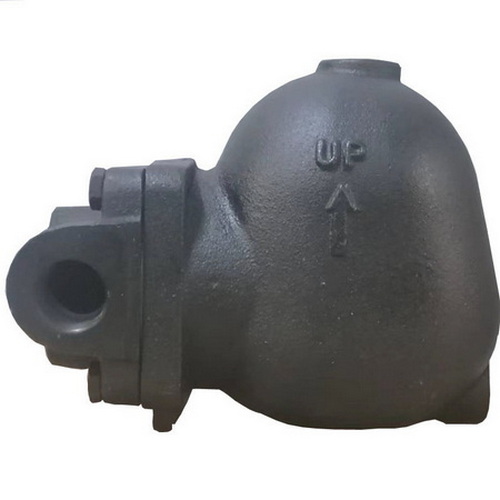
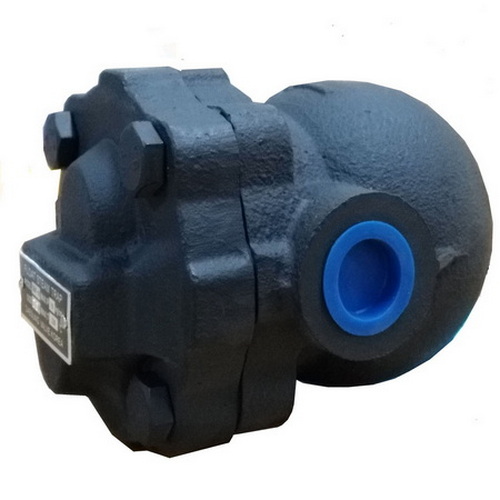
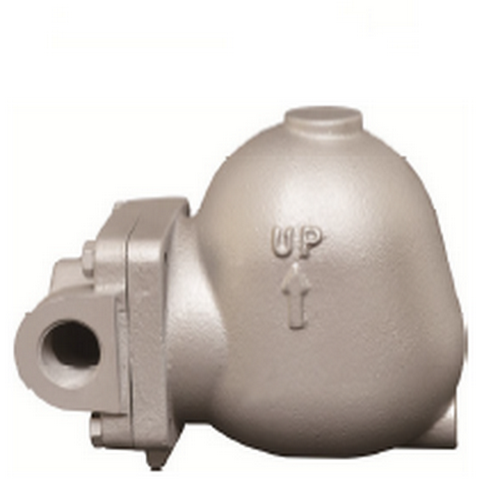
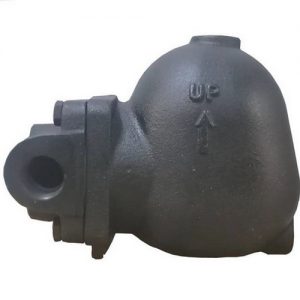
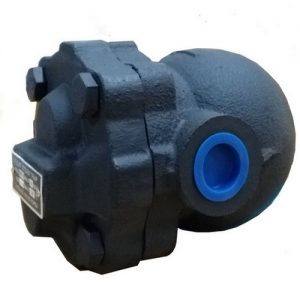
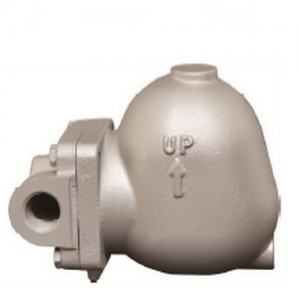
High Discharge Capacity Ball Float Steam Trap
Technical Specifications
- Model: DBF-10S
- Size: DN15-DN50 (1/2″-2″)
- Applicable pressure: Max. 14 Bar (Kgf/cm2)
- Differential pressure: 4.5, 10, 14 Bar (Kgf/cm2)
- Application temperature: Below 220°C
- Connection type: Screwed
- Body: GCD450
- Trims: Stainless steel
- Suitable for steam service
- Capable of discharging large volumes of cold air upon startup.
- Continuous discharge of condensate
- Zero steam leakage and excellent energy-saving performance.
Product Description
Download Technical Documents: click to download PDF datasheet & selection guide.
This is a product we previously manufactured under contract for a South Korean factory. Its quality has undergone rigorous inspection and acceptance by South Korean technical personnel, ensuring excellent and stable performance. Let us now take a detailed look at the float-type steam trap.
1. Structure
This a Lever Ball‑Float Type steam trap belongs to mechanical steam‑draining equipment. Its core components include valve body, stainless‑steel hollow float, lever assembly, valve seat, filter screen and built‑in thermostatic air vent. The hollow float connects to the valve core via a lever mechanism. Multi‑seat design realizes large drainage capacity under compact dimensions. Suitable for heavy‑duty working scenarios with massive condensate output.
2. Working Principle
This trap operates based on buoyancy difference between condensate and steam.
- At system startup: Cold air and non‑condensable gases are expelled by the built‑in thermostatic air vent. Cold condensate flows into the valve chamber and raises the float.
- Normal operation: As condensate accumulates, the floating ball rises with liquid level and opens the discharge orifice. Condensate is discharged continuously at saturation temperature. The valve seat always stays under the condensate surface to form reliable water‑seal, preventing live‑steam from escaping into outlet side.
- When condensate flow decreases: Falling liquid level pulls down the float, which modulates the orifice to reduce flow rate or close the valve.
- Different from intermittent‑type traps, its opening degree changes proportionally according to real‑time condensate volume, instead of frequent full‑open / full‑close cycling.
3. Core Features
- Continuous modulating drainage: Discharge condensate immediately once generated, nearly zero subcooling degree. No condensate accumulation inside heating equipment.
- Built‑in independent air vent: Effectively removes air and non‑condensable gas, avoids air‑locking and accelerates system warm‑up process.
- High adaptability for fluctuating conditions: Works stably under variable pressure and variable‑load steam systems. Minimum operating pressure can reach 0.01 MPa.
- High back‑pressure resistance: High back‑pressure ratio supports condensate recovery projects efficiently.
- Good water‑hammer resistance: Robust internal structure tolerates water hammer impact in pipeline networks.
- Low steam loss: Water‑seal structure greatly minimizes live‑steam leakage for energy conservation.
4. Main Advantages
- Stable heat transfer efficiency: continuous drainage, large drainage volume. No waterlogging inside heat‑exchange devices, keeps process temperature consistent.
- Long service life: lever‑type models adopt wear‑resistant internals for extended working cycle.
- Wide working pressure coverage, reliable performance even under frequent load changes.
- Easy installation and routine maintenance. Internal parts can be inspected or replaced without removing the whole valve from pipeline.
- Excellent energy‑saving performance, reduces steam consumption and operational cost for steam systems.
5. Typical Application Occasions
Ball float steam traps are the preferred choice for equipment requiring continuous condensate removal and stable heat transfer:
- Heat exchangers, shell‑and‑tube heat transfer units
- Jacketed reaction kettles, reboilers
- Drying cylinders, calendar rolls, unit heaters
- Large‑scale heating equipment and process pipelines
- Condensate recovery systems with high back‑pressure requirements
It is less suitable for environments with massive dirt, heavy sludge or super‑heated steam conditions.