
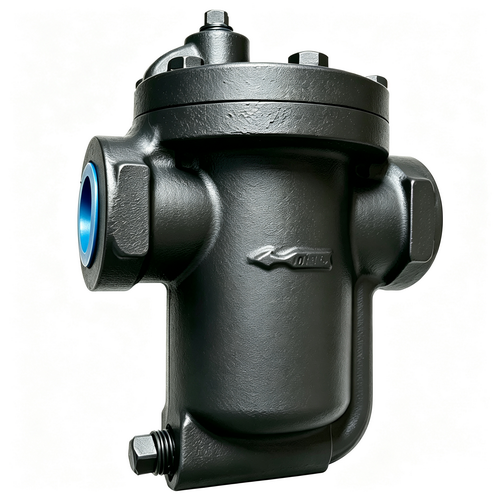
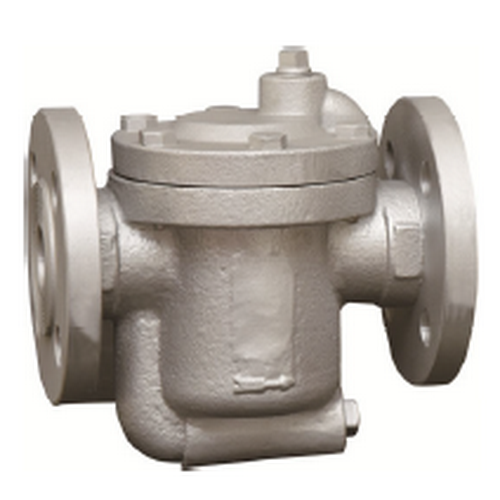
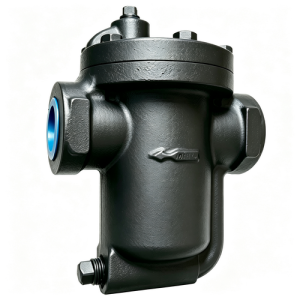
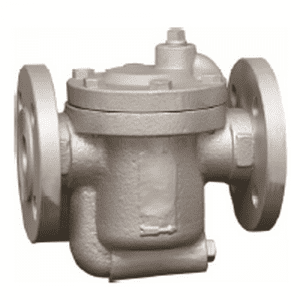
Efficient Inverted Bucket Steam Trap
Technical Specifications
- Model: DBT-10S
- Size: DN15-DN25 (1/2″-1″)
- Applicable pressure: Max. 10 Bar (Kgf/cm2)
- Differential pressure: 7, 10 Bar (Kgf/cm2)
- Applicable temperature: below 220°C
- Connection type: PT, NPT screw
- Body: Cast Iron
- Trims: Stainless Steel
- Suitable for steam service
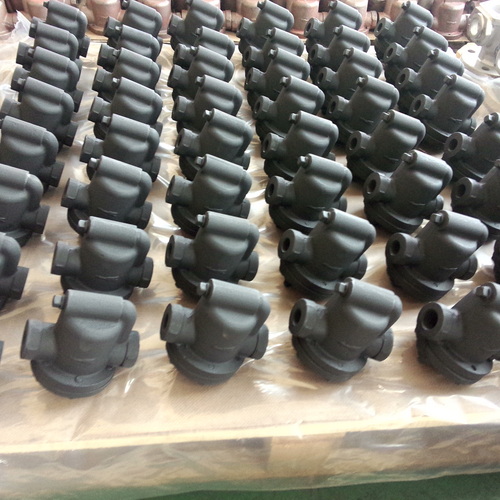
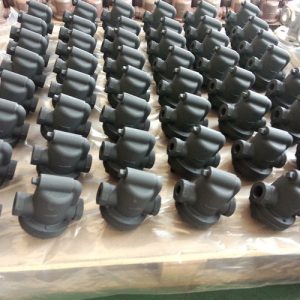
This is a product of which we export over 8,000 to 10,000 units to the United States annually.
This product is widely used in industries such as textile printing and dyeing, commercial laundry, food processing, and pharmaceuticals, specifically in applications where the volume of condensate discharge is relatively low.
Download Technical Documents: Click to download PDF datasheet & selection guide.
Overview
The inverted bucket steam trap is a robust, durable mechanical device designed to discharge condensate; it utilizes the buoyancy difference between steam and condensate to automatically drain condensate while preventing steam loss. It provides efficient condensate drainage for steam distribution lines, steam tracing lines, and steam-operated equipment. The inverted bucket operates reliably and stably within the housing over the long term, helping to reduce maintenance costs and conserve steam energy.
Features
- The free-floating guided lever mechanism operates without friction; all wear points are reinforced, and all moving parts are made of stainless steel.
- A vent hole at the top allows for the continuous, automatic discharge of air and carbon dioxide, preventing condensate lag or air binding.
- The valve orifice is located at the top, preventing the accumulation of dirt and ensuring the valve does not fail to seal tightly due to pipe scale.
- The structure is simple, eliminating issues with jamming or clogging; the open bucket design ensures the bucket is not damaged or crushed by water hammer.
Working Principle
- An upside‑down metal bucket serves as the core moving part connected to the valve assembly.
- During startup, the bucket sinks under weight, opening the valve outlet to discharge cold condensate and trapped air.
- When steam enters the bucket, buoyancy lifts the bucket to close the valve, preventing live‑steam leakage.
- Once internal steam condenses into water, buoyancy disappears. The bucket drops down and re‑opens the valve for condensate discharge.
- This cycle repeats automatically during continuous operation.
Main Advantages
- Heavy‑duty metal structure, excellent resistance to water hammer, long service lifespan
- Tolerates moderate dirt and impurities inside condensate
- Reliable operation under high‑temperature saturated steam conditions
- Simple internal components for convenient on‑site maintenance